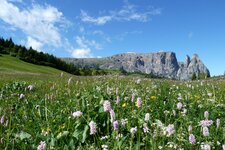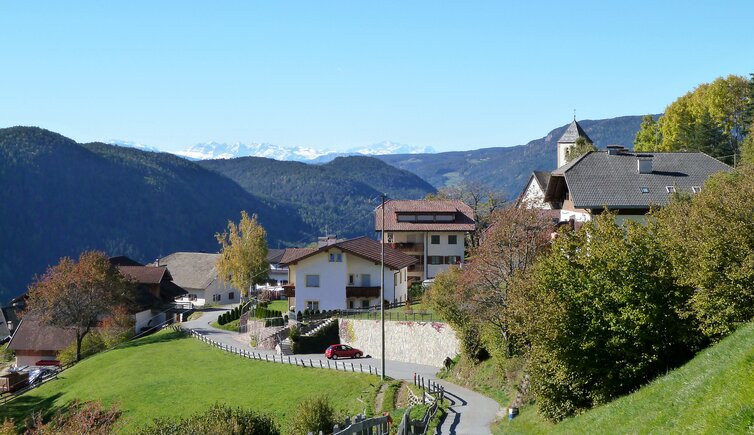
The magnificent view of the Sciliar and the mighty Sassolungo makes Tanurza a truly panoramic spot
Image gallery: Tanurza



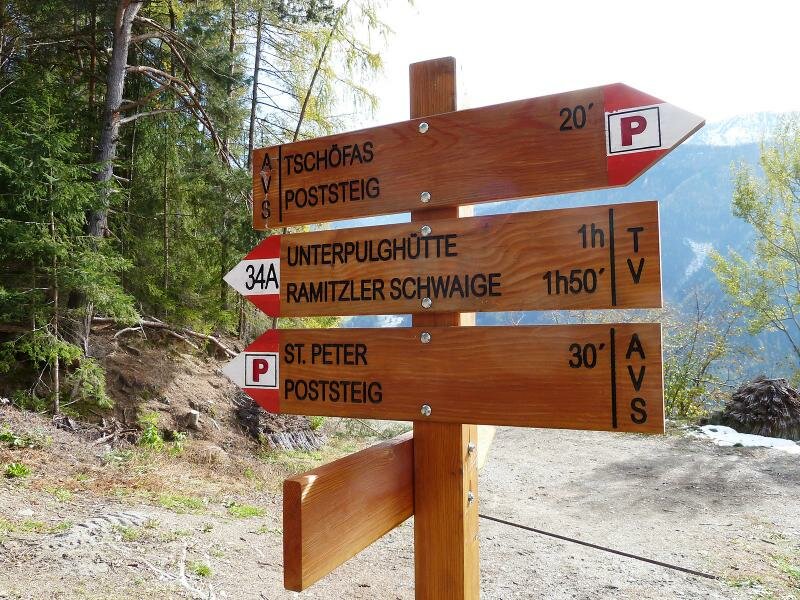


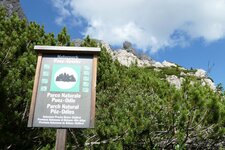
To the west of San Pietro di Laion and right next to Ceves lies the hamlet of Tanurza (Tanirz) with its few farmhouses. All these small hamlets belong to the same municipality: Laion, which extends from the slope above the town of Chiusa to the entrance of the Val Gardena. Above these are mountain huts and high plateaus such as the Rasciesa, which make it possible to explore the area in stages. This magnificent natural landscape is protected within the Puez-Odle Nature Park.
At the centre of Tanurza rises the small Church of St Bartholomew. It is the oldest sacred building in Laion, a scenically positioned building with views of the Sciliar and the Sassolungo. The Sciliar massif, with its characteristic, massive shape, is considered a symbol of South Tyrol, while the Sassolungo, or Langkofel, with its 1,000-metre-high rock face, is the highest peak in the Dolomites of Val Gardena. Romanesque elements are still visible on the church today.
Nearby - we are at an altitude of 1,182 metres here - stands an old walnut tree, which is protected as a natural monument. More specifically, it is a walnut tree with a dry stone wall behind it. Firewood was once stacked around its trunk. Interestingly, all four of the tree's main branches are massive, yet they are all about the same thickness with a circumference of around 1.5 metres.
The area, as well as the high alpine pastures above it, can best be explored on foot, by mountain bike or with snowshoes. One option is the circular walk from Tanurza to Laion, which takes less than two hours and leads via a meadow path to Fraina and on to the village square in Laion. For the return journey, the Poststeig trail is a good option: It is the historic path that connects Laion and Ortisei in the Val Gardena valley. The constant views are impressive.