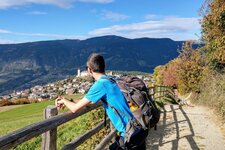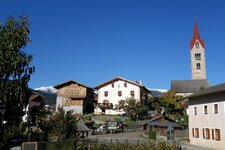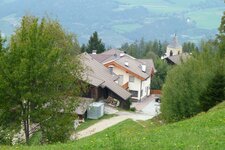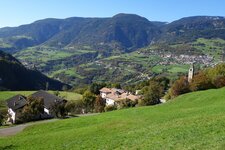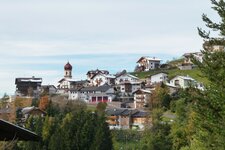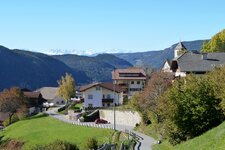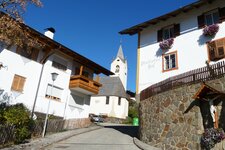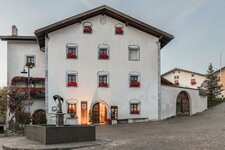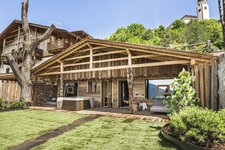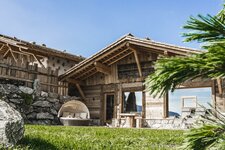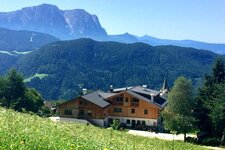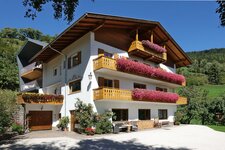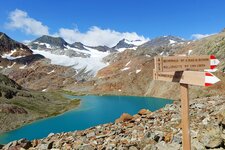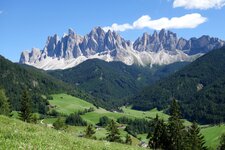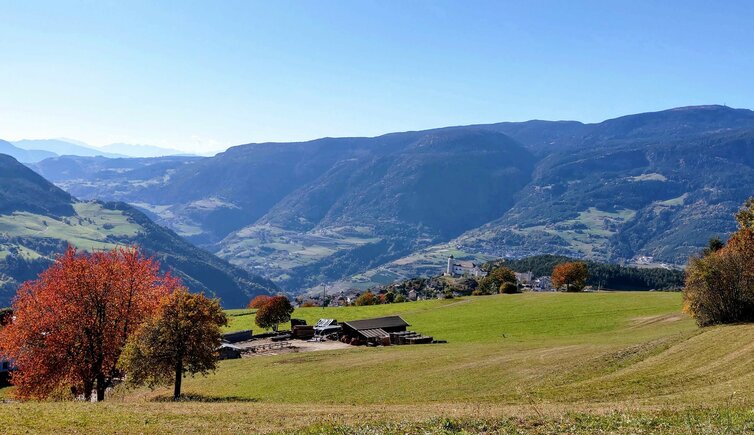
The sunny slopes of Laion in the lower Valle Isarco stretch up into the high mountains



The centre of Laion lies at the entrance to the Val Gardena. The municipality's other hamlets are scattered across the surrounding slopes, the westernmost foothills of the Odle Group in the Dolomites. The area extends up to the Rasciesa, a high alpine pasture and a popular destination for excursions, situated between the Val Gardena, Funes, and Laion.
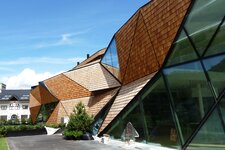
Laion is a quiet resort. A name inextricably linked with the village is Walther von der Vogelweide, who is said to have been born at the Vogelweider Hof farmstead. A circular trail dedicated to him now leads to this farm in the hamlet of Novale di Laion. Information panels there tell the story of one of the most famous minnesingers of the Middle Ages. A few years ago, the "Minnehus" on the village square in Laion, a multisensory visitor centre, was also dedicated to him.
Albions, Fraina, San Pietro, Tanurza, and Ceves are also spread across the surrounding slopes. Only Pontives is an exception, located at the entrance to the Val Gardena. The small village, known for its helicopter landing pad and the Heide Nativity Scene Museum, which introduces the art of Val Gardena's woodcarvers, acts as a bridge to the Ladin-speaking and cultural area.
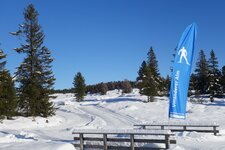
Every season in Laion has its own charm: cherry blossoms in spring, hikes such as the Wasserbühl Circuit in summer, and the Toerggele season in autumn. These wonderful evenings always include roasted chestnuts, meat platters, young wine, and sweet Krapfen. In winter, the skiing areas of Dolomiti Superski are easily accessible, including the one in the Val Gardena with a direct connection to the Alpe di Siusi. High ridges like the Rasciesa are perfect for tobogganing.
A special feature is the thatched roofs, which can now only be seen on a few buildings in South Tyrol, including in Laion. Until well into the 20th century, they were common, especially on farm buildings in rural areas. With good maintenance, such a roof would last for about 25 years. In the Valle Isarco, rye straw was predominantly used, as it was more affordable for many farming families than other building materials. Today, only a few of these thatched-roof houses remain.